- 01st Mar '26
- Mega Feedback
- 38 minutes read
- Author: Mega Feedback
Data Enrichment: Definition, Types, Benefits, Challenges & Best Practices
 Share
Share Share
Share Share
ShareData Enrichment: Definition, Types, Benefits, Challenges & Best Practices
Data enrichment is like giving your boring old data a triple espresso shot. It jazzes things up, making insights more vibrant and decisions sharper. Whether you're a data enthusiast or someone who's just been roped into this techy whirlwind, the importance of data enrichment can't be understated. Picture your database as a garden. Without the right nutrients, your flowers (or data points) wither! Over the past years, I've experienced the ups and downs of data quality. Like trying to order a coffee in a crowded café—it's often all over the place! So, let’s unearth the treasures lurking in data enhancement and see how it can really tickle your business's fancy.
Key Takeaways
- Data enrichment adds depth to your data, making insights clearer.
- Effective strategies can significantly improve data quality.
- Choosing the right tools is crucial for successful data enhancement.
- Email database enrichment is vital for better engagement.
- Understanding the differences between data enrichment, enhancement, and cleansing helps clarify processes.
Now we are going to talk about something that seems fancy but is more useful than a Swiss Army knife—data enrichment. Just like how Grandma spruces up her famous chili with secret spices, data enrichment spices up a company’s databases to make them more flavorful and effective.
The Scoop on Data Enrichment
Data enrichment is all about enhancing what you already have. Think of it as a digital spring cleaning. You dig through that closet of spreadsheet clutter and add valuable nuggets of information to make it more robust and reliable. Without enriching data, companies might just be lost in the digital wilderness, like finding your way at a theme park without a map. Imagine running a cupcake bakery and only knowing your customers' names—what if you could also know their favorite flavors or when their birthdays are? Data enrichment fills in those gaps. Here’s how it works:
- Filling in the Blanks: It identifies missing details in your database, just like filling in crossword puzzle clues.
- Accuracy Uplift: It fixes errors like a digital personal trainer, keeping your data in tip-top shape.
- Context Matters: Adding context turns simple data points into stories, helping businesses get cozy with their customer base.
Now, why does all this matter? In our tech-savvy world (hello, AI and memes), businesses need to know their customers beyond a name and email. More updated data leads to better decision-making, enhancing customer experiences like giving them that extra sprinkle of fairy dust. This isn't just fluff—companies can segment their audience more effectively, leading to smarter marketing. Think about Netflix, which knows you probably don’t want to watch a historical documentary after binging on action flicks. They enrich their user data with viewing preferences, making that next movie night a lot more enjoyable. Let’s talk about incorporation, shall we? Getting that precious data may sound as complicated as assembling IKEA furniture, but it’s worth it. Companies can extract information from various external sources, like social media or other databases. This brings in juicy insights about demographics, preferences, and shopping behaviors. And think about risk management—having enriched data means sifting through risks more accurately. Less guesswork and fewer surprises, like discovering your holiday sweater isn't actually ugly without the festive lights. In conclusion, data enrichment is all about making data more comprehensive. Every well-structured bit of information allows us to scratch more than just the surface. Instead of just knowing who your customers are, imagine being able to anticipate their needs, much like a good friend who remembers what you like on pizza! That’s the power of understanding and enhancing customer data.
Now we are going to talk about the different types of data enrichment that can really get businesses ahead of the competition. Every marketer knows that knowledge is power, right? Well, data enrichment is like finding a treasure map in a video game: it just might point us toward the gold. So let’s break it down together!
Exploring Different Categories of Data Enrichment
Data is like a buffet; there's so much to choose from! The main flavors of data enrichment include firmographics, sociodemographics, behavioral, geospatial, technographic, and psychographics.
First up, we have:
- Firmographic Data Enrichment: This is where businesses get the lowdown on other companies. Think company size, industry, and even how well they’re performing financially. Imagine being able to understand your competitors better than they understand themselves!
Now we’ve found ourselves a fine steak at this data buffet. Targeting your B2B audience becomes as easy as pie. We can thank sources like public records and commercial data providers for this rich info.
However, keep in mind that just like fish, data can go stale fast. Mergers, acquisitions, and such can tango away with our precious insights.
- Sociodemographic Data Enrichment: This one is all about us, the people! We’re gathering age, gender, income, and all those delightful stats. It’s like doing a little detective work to create tailor-made marketing tactics.
But beware! One misstep in privacy laws like GDPR can have a company wishing they’d never opened that can of worms.
- Behavioral Data Enrichment: Here, we’re observing how individuals interact with apps and websites. This isn't just stalking; it’s strategic marketing! Information on web clicks and purchasing habits can help shape in-depth customer profiles.
Using tools like Google Analytics, we can really get the breadcrumbs of consumer behavior. But it’s a slippery slope—too much data can require a PhD just to make sense of it!
- Geospatial Data Enrichment: Where’s the party at? Geospatial data gives specifics about locations as if we were GPS systems. Knowing where a consumer is located can really spice up marketing strategies, especially for delivering pizza—um, products!
Data sources can range from GPS data to IP geolocation, but always remember that such insights carry their own bags of nuts; we shouldn’t forget to prioritize customer privacy.
- Technographic Data Enrichment: This data covers the tech a company uses. It's kind of like swiping right in the tech world—you want to align with the right tools.
Especially useful for tech firms, this data aids in targeting companies based on their tech usage and preferences. But, let's not kid ourselves, gathering this info isn’t a walk in the park.
- Psychographic Data Enrichment: Last but not least, this data digs deep into what makes us tick—values, interests, hobbies. Think of it as marketing’s trump card!
Finding out what stirs the hearts of consumers can lead to campaigns that resonate at an emotional level. However, tread carefully; misreading this data can launch a marketing fiasco that leaves brands scratching their heads.
Next, we will discuss why data enrichment is a big deal for organizations today. Think of it as sprinkling a little fairy dust on your data—it’s all about boosting what you already have!
Why is Data Enrichment Essential?

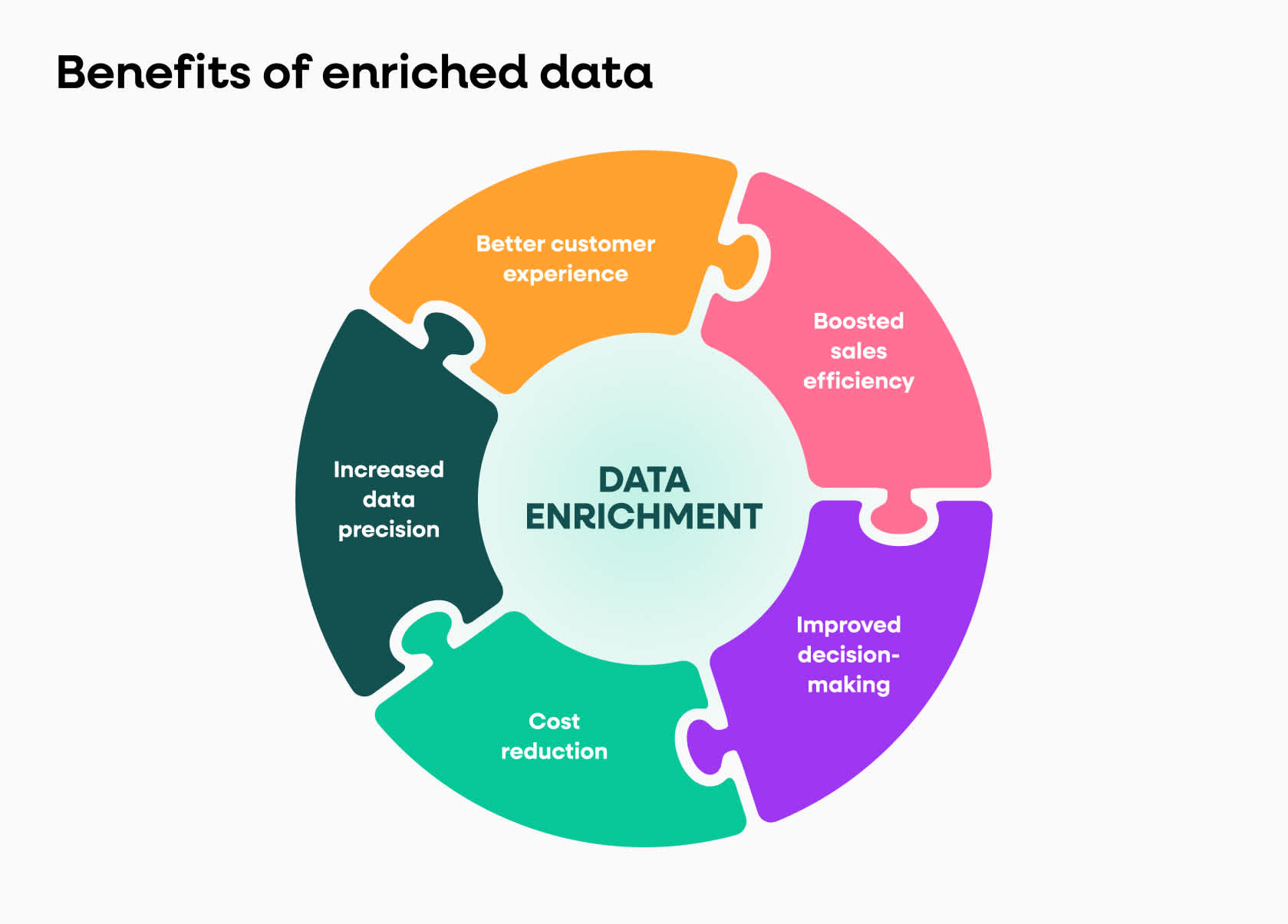
So, why should anyone care about data enrichment? It's not just for the data nerds in the corner. The benefits are impressive and cover various aspects of business management.
| Benefit | Description |
|---|---|
| Improved Data Quality | This ensures everything is accurate and reliable, minimizing those pesky inconsistencies. |
| Enhanced Customer Insights | Gives businesses a clearer view of what customers want and need, helping to craft tailored marketing strategies. |
| Risk Management | By identifying risks like fraud or default early on, companies can protect their interests more effectively. |
| Regulatory Compliance | Staying on the right side of rules like GDPR keeps businesses out of hot water. |
| Operational Efficiency | Data enrichment reduces the need for manual processes. Who wants to juggle spreadsheets anyway? |
Now, let’s get into some details. When we say "Improved Data Quality," we mean it’s like cleaning out your closet—making sure everything fits and nothing is outdated. You wouldn’t wear a Hawaiian shirt from 1999 to an important meeting, right? The same principle applies to data. It needs to be credible, or you might as well be throwing darts blindfolded.
Enhanced Customer Insights sounds fancy, but it's just about understanding your customers better. It’s like that friend who can finish your sentences. The more data you have, the better you know what makes your customers tick. Perhaps, they prefer their coffee dark and bitter—like Mondays! Understanding these nuances helps businesses create marketing strategies that actually resonate.
And don’t underestimate Risk Management. It’s not about wearing a hard hat and high-vis vest. It’s about spotting trouble before it arrives on your doorstep. Improved data can help companies avoid unintended mishaps—saving both money and embarrassing moments. Just think about that time someone shared the wrong info at a customer meeting... Oof!
Remember the endless changes in regulations? With data enrichment, companies can keep pace with rules like GDPR and CCPA. It’s a hassle! But, maintaining compliance will save a world of headache down the road. Picture fines that feel like your wallet just went for a swim in a shark tank.
Finally, let’s talk about Operational Efficiency. Everybody loves a good automation story. Using enriched data can streamline processes, getting rid of manual work. Why do the hard yards when tech can do it with a fraction of the fuss? Less admin means more time for strategy (or that much-needed coffee break).
In a nutshell, data enrichment isn’t just a buzzword; it's the key to unlocking better decisions, compliance, and happier customers—while making our jobs a little easier! Sounds win-win, don't you think?
Next, we are going to discuss the hurdles in data enrichment that often leave companies scratching their heads. Think of it as trying to resolve a jigsaw puzzle with a few missing pieces – frustrating but doable with the right approach!
Challenges in Enhancing Data Quality
When it comes to data enrichment, we often run into some head-scratchers. Buckle up, folks! It’s like herding cats. Here are a few of the challenges we might face:
- Data quality. Oh, this one’s a doozy. Imagine trying to mix fresh strawberries with old, moldy ones. If the new data isn’t up to snuff, we’re setting ourselves up for a banana peel slip on those all-important business decisions. Skewed or incomplete data can make us look like we were thrown into a blender with no lid!
- Data privacy. Pairing data can feel like walking a tightrope. We have to be super careful when throwing new information into the mix, especially when sensitive data is involved. Nobody wants to be the headline for a privacy scandal, right? Like they say, “What happens in data does not always stay in data.”
- Data integration. This challenge is like trying to fit a square peg into a round hole. Pulling information from multiple sources can take longer than searching for a phone charger in a chaotic living room. It requires a boatload of patience and might just lead to some colorful language along the way.
- Data analysis. When we're handling heaps of data, finding what’s genuinely relevant can feel like searching for a needle in a haystack. Technical tools are needed, but let’s face it, not everyone has a Ph.D. in crunching numbers. Plus, analysts need to wrangle that data like a rodeo cowboy – tricky!
- Data communication. This one can occasionally lead to ‘Lost in Translation’ moments. We’ve all experienced those instances where we need to explain our findings to someone not versed in tech lingo. It might feel like trying to explain the intricacies of astrophysics to a cat – utterly baffling!
We might find ourselves needing a cup of coffee or two to tackle these issues. Keeping up with data quality is crucial, and as we all know, quality over quantity should be our mantra. In a recent meeting, one of us almost slipped up by sharing outdated data – yikes! Thankfully, we caught it in the nick of time, much like catching a dropped ice cream cone before it hits the ground. Let’s remember that overcoming these barriers isn’t just about untangling the mess; it’s about growing our understanding and refining our processes. After all, it’s a team sport!
Now we are going to talk about some smart and effective ways to enrich data, making it not only useful but also secure. Let’s break it down into bite-sized pieces, shall we?
Top Strategies for Effective Data Enrichment
- Set clear goals and pick trusted data sources. Imagine trying to bake a soufflé without a recipe—chaos in the kitchen! The same goes for data enrichment. We must set clear objectives to guide us. This means knowing precisely what we want to achieve. Take, for instance, a company wanting to refine its customer segmentation. They’d benefit from gathering demographics, insights from surveys, and yes, even a few scrolls through social media. Always vet your data sources. Not everything on the internet is gospel. Look for reliability and credibility, especially when dealing with sensitive information, because, let’s face it, nobody wants a data breach to spoil the party.
- Maintain data quality and protect privacy. Imagine you walk into a restaurant with moldy bread—yikes! That’s what poor data feels like. Prioritizing quality, as well as security, ensures that the insights drawn are actionable and relevant. Regularly clean up data and make sure it meets quality standards—think of it as data spring cleaning! Implement robust security measures like encryption and strict access controls. Let’s not skip the legal stuff either. Staying compliant with data protection regulations keeps both customers and the business safe. We all know it’s better to be safe than sorry, right?
Remember, the foundation of successful data enrichment is knowing what we want and ensuring we use the right tools and processes. With clear objectives and reliable sources, supplemented by ironclad security practices, we can transform our data into a powerful asset. So, let's roll up our sleeves and make the most out of our data today—because who wouldn’t want to turn numbers into treasure?
Next, we are going to explore some valuable resources for enriching data. These tools can help businesses boost their lead generation and enhance customer interactions, making operations smoother than a fresh jar of peanut butter.
Key Tools for Enhancing Data Quality
The tools for enhancing data quality include Alteryx, FullStory, HubSpot, ClearBit, ZoomInfo, and, of course, FullContact.
Here's a look at these fantastic data enhancement tools.
Alteryx
Ah, Alteryx! It’s like the Swiss Army knife of data analytics. With its colorful interface and intuitive design, even a toddler could probably pull off some amazing data transformations—though we wouldn't recommend it with real business data, of course. The subscription model can sting a bit, with their Designer Cloud starting around $4,950. But hey, if your budget’s tight, remember that a good tool can save you countless hours, which in this fast-paced world is priceless.
FullStory
If you’ve ever wanted to snoop on how users interact on your site without going full-on creepy, FullStory is your go-to. It records user behaviors, much like a good neighbor sharing a bowl of popcorn while watching your favorite drama unfold. Just keep your eye on those pricing scales; they can shoot up faster than your heart rate during a horror movie!
HubSpot
HubSpot seems to be the golden retriever of marketing tools—loyal, friendly, and always ready to help. It offers an all-in-one hub that’s easy to navigate. Whether you need marketing, sales, or customer service tools, it’s like a buffet that caters to various tastes. Just remember, not everyone likes the chicken salad, and the advanced options can cost quite a bit, but the free features can cater to smaller businesses effectively.
Clearbit
Clearbit struts into the room like a confident peacock with its array of APIs to help enrich customer data. While it can be a bit on the pricey side—anywhere from $99 to $999—it’s like investing in a designer handbag. Sure, it’s not cheap, but boy, does it elevate your style…and marketing efforts! And if you’re looking to boost engagement and personalize campaigns, Clearbit might just be your new best friend.
ZoomInfo
ZoomInfo is the treasure map for B2B contacts, guiding users through a maze of potential leads. It’s not the cheapest option, but its comprehensive datasets can turn a clueless seller into a savvy salesperson. Like someone always ready for trivia night, ZoomInfo equips your team with the right information at the right time—just don’t be surprised when the price tag punches a hole in your wallet!
FullContact
FullContact gives users a peek into how to enhance customer profiles by integrating social media data. It’s like pouring just the right amount of cream in your coffee—making it smooth and delightful to consume. Whether you’re focused on lead identification or customer recognition, FullContact can add a string of gold to your data guitar. Just watch how those pricing plans fluctuate; it's like trying to predict the weather—always a gamble!
These tools can make data enhancement feel almost magical, crafting clearer insights and driving more effective business strategies. Now it’s time to roll up our sleeves and dive into the world of data enhancement tools!
In the next section, we are going to discuss a practical guide on how to kickstart data enrichment in a way that doesn’t feel like trying to herd cats! Spoiler alert: it involves a little organization and a dash of creativity.
Steps to Start Data Enrichment
To roll out data enrichment, it’s crucial to remember a few straightforward steps that keep you from jumping through hoops. Here’s how we can take it one step at a time:
- Setting Objectives. Kick things off by deciding what you want to achieve. Are we looking to spice up our customer profiles or maybe target users more effectively?
By zeroing in on what success looks like, we're not just throwing spaghetti at the wall to see what sticks. This is critical! For instance, if boosting lead qualification is on the agenda, limit your focus to inquiries from the past quarter only.
- Choosing the Right Data Sources. Next up, let’s find those gold mines of data!
Picking the right sources is like selecting the perfect avocado for your toast—it can make or break the meal! Make sure you choose reliable and accurate data, or your enrichment could end up a bit flat, much like stale bread.
For example, utilizing tools like Clearbit for B2B data can work wonders—just remember to ensure compatibility with your existing systems.
- Integrating Data. Now, let’s make that data dance! Merging new external datasets with the ones already in the mix is where the real magic happens.
It’s like adding a splash of lemon to your iced tea; it brings everything together! Using precise matching rules—think email, name, company—helps keep it organized.
For instance, if your main matching crux is email, some fun fuzzy logic can save the day on those tricky components that don’t align perfectly.
- Performing Quality Checks. Here comes the critical part: keeping our data sparkling clean.
You wouldn’t serve a meal without checking for hair in it, right? Data quality checks are essential! Utilize validation rules and tools to banish inconsistencies as if they were unwanted guests at your dinner party.
Check those email addresses and standardize formats—it’s like giving everything a fresh coat of paint.
- Testing and Validation. Before rolling out the red carpet, test the data to ensure it meets our goals.
This is akin to a dress rehearsal before the big show. Look out for any discrepancies and amp up the accuracy through User Acceptance Testing.
Imagine comparing enriched customer profiles with actual feedback—you’ll want that info to ring true!
- Launching and Monitoring. Finally, let’s put everything into action and keep an eye on it!
Deploying enriched data into your various systems is essential, but don’t let it gather dust. Establish metrics to track performance over time—like checking your plants’ growth, you want to make sure you’re watering them regularly!
Using enriched customer data can supercharge your marketing efforts or even help you better understand how your clients are engaging with your campaigns.
| Step | Description |
|---|---|
| 1. Setting Objectives | Define what success means for your data enrichment. |
| 2. Choosing Data Sources | Select reliable external data sources. |
| 3. Integrating Data | Merge new data with existing datasets effectively. |
| 4. Quality Checks | Ensure consistency and reliability in your enriched data. |
| 5. Testing and Validation | Conduct checks to confirm data accuracy. |
| 6. Launching and Monitoring | Deploy and track the enriched data's performance over time. |
Now we are going to talk about how data enrichment services can really amp up existing datasets.
Understanding Data Enrichment Services
So, imagine you’ve got a solid birthday cake, right? It’s chocolate, but what if you could infuse it with raspberry cream? Suddenly, it’s not just a cake; it’s a celebration! That’s what data enrichment services do—they take your basic data and transform it into something truly delectable by adding extra layers and flavors from external sources.
Here’s a quick rundown of six key services that sprinkle that magic touch on your data:
- Data verification and validation. Think of this as your quality control. By ensuring there are no typos or inconsistencies, businesses can trust their data and make more informed decisions. It’s like double-checking your grocery list to avoid spending an hour wandering the store looking for a unicorn.
- Data appending. This is all about filling in the gaps. Imagine if you only had your friend’s first name and email. Wouldn’t it be handy to know their phone number too? This service adds those crucial details that turn a name into a complete profile.
- Data standardization and formatting. Different sources are like different instructions for assembling IKEA furniture—confusing and often contradictory. This service normalizes that data into a consistent format, making it easier to merge and understand.
- Third-party data integration. It’s like having a friend who knows everything about everyone and helps you source info from public records and commercial databases. With this service, businesses pull in relevant data without having to dig for it.
- Custom enrichment. This is where the magic gets personal. Adding details that pertain to a specific industry or behavior brings unique insights to the table. It’s the equivalent of adding a personalized frosting on our enriched cake.
- Real-time enrichment. Imagine having the freshest ingredients for your cake. Real-time enrichment provides up-to-date info, enabling businesses to act swiftly—think fraud detection as a kitchen smoke alarm going off right when things start to heat up!
Now, how do we actually use this enriched data? Here are a few tasty tidbits:
- Marketing. Marketers use data from social media to spice up customer profiles. Understanding what customers like means targeting them with just the right slice of marketing appeal.
- E-commerce. An online store can fill product listings with rich details, ensuring that customers have all the info to make informed decisions. Think of it as providing the full menu instead of just the dish name.
- Sales. Sales teams love demographic data! Having insights into potential customers allows them to craft messages that feel tailor-made rather than “Dear Sir or Madam” canned responses.
So, how does data enrichment stack up against other data processes? While some aim to polish and perfect, enrichment's goal is to add valuable information to the mix. It’s a bit like upgrading from cola to a fancy cocktail—same base, but oh, what a difference it makes!
Now we are going to discuss the nuances between data enhancement and data enrichment, because who knew data could be so fancy, right? Let’s break it down, no jargon involved. Just like deciding whether to upgrade your phone for more storage or just clean up the apps clogging your memory.
Understanding Data Enhancement vs. Data Enrichment
When we think about data, it’s like baking a cake. Data enhancement is akin to adjusting the recipe—maybe adding a dash more cinnamon, because why not? We’re refining what we have. On the other hand, data enrichment is like tossing in new ingredients, like sprinkles or chocolate chips. You’re enhancing the dish by infusing it with delightful surprises. Here’s how we can look at it:
- Data Enhancement: Tweaking existing data to make it better. Think of it as a face-lift for your records. It's about correcting errors, updating outdated info, or standardizing formats.
- Data Enrichment: Adding new fields of data. This could mean infusing your customer list with demographic data you didn’t have before. It’s like giving them a full profile—age, interests, and maybe even their favorite pizza topping.
To illustrate, let's consider a recent trend—companies throwing big data parties. Imagine a startup needing insights into their customer base They might start with basic info, like name or email. Sure, they can enhance that data by correcting typos, but what if they need to know more? That’s where data enrichment struts in, adding layers of detail. Think of it as meeting someone at a party. You learn their name (enhancement), but once you find out they love skydiving and karaoke (enrichment), you realize you've got a friend for life! It’s fascinating how both processes play crucial roles in data management. Businesses that mix the two well get insights like a chef mastering a secret sauce—able to whip up data recipes tailored for any occasion. Recently, with the rise of AI and machine learning, we see these strategies being used more than ever. With tools that can swiftly analyze and enhance data, businesses are discovering ways to make every bite of their data more delicious and appealing. In conclusion, when enhancing or enriching, consider what your data meal needs. Are we just fixing the recipe, or are we adding a twist that’ll surprise the diners? This little distinction could mean the difference between just another dish and a feast fit for tech royalty. So the next time you’re sifting through spreadsheets, remember—are we enhancing what’s there, or sprinkling in some new flavors? Bon appétit!
Now we are going to talk about how data enrichment and data cleansing are not just buzzwords thrown around in a boardroom but essential tactics that can make or break your data strategy.
Understanding Data Enrichment vs. Data Cleansing
Imagine the last time you had a messy closet—sweaters piled on shoes and accessories tangled like old holiday lights. In data terms, that's akin to poor-quality data. We’ve all been there, sighing as we try to find that favorite sweater, much like wading through inconsistent data. Here’s where data cleansing strides in, tidying things up. It’s the roommate who organizes the mess, ensuring everything has a place. We’re talking about spotting errors, reducing repetition, and fixing inconsistencies. Think of it as cleaning up before inviting guests over; you wouldn’t want them tripping over a wayward shoe! Once we have our “closet” in order, it’s time to splash on some decor. That’s data enrichment. This entails adding fresh, relevant info to boost the existing data, like throwing in some stylish cushions after tidying up. When you enrich your data, you’re bringing in additional insights—enhancements that make your data more valuable and insightful. Imagine loading up your closet with new outfits; now that’s something to show off! Here’s a wee breakdown:
- Data Cleansing — The clean-up crew that ensures accuracy.
- Data Enrichment — The stylish add-ons that enhance efficiency.
Let’s roll out a handy little table to visualize the differences:
| Aspect | Data Cleansing | Data Enrichment |
|---|---|---|
| Focus | Correcting errors | Adding new information |
| Objective | Improve data accuracy | Enhance data value |
| Process | Removing duplicates | Integrating insights |
In today’s business landscape, both cleaning up the data and enriching it are crucial steps for success. Let’s say we’re a company trying to cozy up to customers. Data cleansing gets us tidy and ready—no more stumbling blocks like outdated email addresses. Then, enriching the data creates personalized experiences, like knowing a customer’s birthday, leading to birthday emails that don’t land in the spam blacklist! In a nutshell, both processes are vital for survival in our data-driven jungle. Keep your data nook neat and stylish, and you’ll wow both customers and stakeholders alike. Kudos to a strong data strategy!
Now we are going to talk about the distinctions between data quality and data enrichment. It’s quite the topic, and knowing the difference can help us harness our data more effectively.
Understanding Data Quality vs. Data Enrichment
Data quality and data enrichment often sound like a pair of fancy shoes one might wear to impress a crowd at a party, but they serve different purposes. Think of data quality as the foundation of a house. If it’s shaky, you’ll know it when the first storm rolls in. Data quality ensures our information is complete, accurate, timely, and consistent. It’s like that friend who always remembers your birthday and brings the best cake—never late, always reliable. Then we have data enrichment, which is akin to sprucing up that house after it’s built. Imagine painting the walls, putting up some nice curtains, and adding a few plants. Here, data enrichment fills in the gaps. It corrects errors and adds missing pieces to make our data even more reliable. For instance, let’s say a client’s phone number is missing in our database. With data enrichment, we can hit the digital streets to gather that information. It’s like digging through old friends' photos to find that one gem of a memory! We can break it down further:
- Data Quality: Focuses on accuracy, consistency, and completeness.
- Data Enrichment: Aims to enhance existing data with additional details.
It’s essential to think about how both elements interact. For example, if you have a database of customers but it’s packed with typos, easy to see how that could have a ripple effect. Trust me, nobody wants to call a client named “John Dough” instead of “John Doe.” That’s a recipe for confusion! Now, you might wonder how this connects to our modern, tech-savvy lives. With companies regularly updating customer information and using state-of-the-art tools for data analysis, maintaining data quality is crucial. Just look at what’s happening in industries like healthcare or finance! Data that’s not up to par can lead to poor decisions, which, let’s face it, isn’t great for any business. And as we dive deeper into digital compliance, like GDPR, ensuring data quality and enrichment are not just best practices; they're necessities. Think of staying compliant like wearing sunscreen on a sunny day: it’s just smart! In conclusion, saving money, time, and effort hinges on knowing the difference between these two concepts. So, let's remember: data quality is about the bedrock, while data enrichment gives the whole thing a well-deserved facelift. And who doesn’t appreciate a little decor enhancement now and again? With this knowledge, we can make more informed decisions and ensure our data truly serves us well. Now, let’s roll up our sleeves and get to work on that data—after all, a little TLC goes a long way!
Now we are going to talk about the distinctions that keep data enthusiasts buzzing, especially those of us navigating the ever-widening sea of data management. Spoiler alert: there’s more than meets the eye! Let’s break it down.
Understanding Data Transformation vs Data Enrichment
When we think about data transformation, we're really looking at a makeover—like giving a classic car a fresh coat of paint and a shiny new engine. For example, remember that time when we tried to convert an old school spreadsheet filled with numbers and notes into something sleek and shiny? That was a transformation! It’s all about changing the format or structure of the data. Here are a few things that happen during data transformation:
- Aggregating data—think of combining all that pizza order data to see which topping reigns supreme.
- Converting data types—ever tried mixing apples and oranges? Just kidding, but this is like switching a date format from MM/DD to DD/MM.
- Normalizing data—this is where we tidy up; making sure all entries follow the same rules, so no one shows up to a party in pajamas when everyone else is dressed up!
Now, on the other side of the coin, we have data enrichment. If data transformation is a fresh look, data enrichment is like turning our simple muffin recipe into gourmet status by adding chocolate chips and blueberries. It's all about adding new bits of information to fill in the gaps. Here’s what data enrichment does:
- Completing profiles—like adding someone’s favorite color or go-to coffee order, making the data feel whole.
- Enhancing existing data—updating your record to say, “Hey, John is now a cat dad!” It’s always fun to brag a little, right?
- Providing context—like knowing that John’s cat helps him avoid pesky rodents, which can come handy in the data analytics game.
Both these processes are vital, but they serve different purposes—like Batman and Robin, or peanut butter and jelly. While transformation reshapes the data for clarity and usability, enrichment adds depth, turning bare-bones data into a multi-layered, informative feast. And let’s be honest, a data set full of fluff will never be as insightful as one that's been treated to some good old-fashioned enrichment! So, when we mull over our business strategies and analytics efforts, knowing whether we are transforming or enriching can make all the difference. Let’s keep the conversation going and remember: Just like any recipe, the right balance is key to cooking up some stellar insights!
Now we are going to talk about the distinctions between data management and enhancing data. You might think they sound similar, but believe me, they've got their own quirks and charms.
Diving into Data Management versus Enrichment
When we chat about data management, we're essentially discussing how we look after our data like a digital gardener. It’s like that time when someone asked if I could organize my extensive board game collection. Let’s just say putting those colorful boxes together took longer than a small child's tantrum over losing a game piece! So, data management means *collecting*, *organizing*, *documenting*, and *preserving* the data throughout its life—essentially babysitting data until it’s old enough to browse the internet on its own. Part of this process involves creating a system where data doesn’t get lost in the chaos. On the flip side, there’s data enrichment. Imagine you have this fantastic cake—chocolate, fluffy, the works. But wait! Do you add sprinkles or cherries? That’s the essence of data enrichment: adding new information to boost what you already have. For instance, think of enriching customer data with social media profiles. It’s like adding those delightful sprinkles that make everything a bit more exciting! So, what do we need to keep in mind? Here’s a handy list:
- Data Management includes all steps from data collection to preservation.
- Data Enrichment is just about spicing things up with new info.
- Enrichment is an *offshoot* of management—like the fun cousin at a family reunion.
- Both are crucial for effective data usage.
As we delve deeper into these elements, it’s clear that robust data management ensures our information remains accessible and accurate. If not, well, we’d be digging through imaginary piles of digital junk, which nobody signed up for! Data enrichment, meanwhile, gives that extra zing to what’s already there, providing insights from deep in the data jungle. And let's be real: Who doesn’t want to find out more about their customers beyond just their email addresses? Moreover, with the latest upheavals in the tech world, staying ahead means constantly enriching that data stash. Look at companies focusing on personalization—you can be sure they’re knee-deep in both data management and enrichment. So, while we may not all be data wizards, knowing these distinctions helps us strategize better in a landscape that’s not just about raw numbers but crafting stories through data. After all, is there anything better than a well-organized, enriched data cake? We think not!
Now we are going to talk about how enriching data can really jazz up our email lists. It’s like adding spices to a dish—you know, turning something basic into a flavor fiesta!
Benefits of Enriching Email Databases
Let’s give this a whirl: enriching email databases can really be a breath of fresh air for any marketing team, and not just because we've finally learned the difference between “your” and “you’re.” It's all about making sure our information is as crisp and fresh as last week’s groceries—not the moldy ones at the back of the fridge! Imagine waking up one day, and your email list looks like a garden in spring; vibrant, full of life, and ready to bloom. Here’s what enriching data can do:
- Accuracy and Completeness: We can kiss goodbye to those bounces like we kiss January goodbye when summer rolls in. With enriched data, we get actual details that stick, rather than the ghost emails that have haunted our lists.
- Better Customer Insights: It's like reading the tea leaves; digging deeper into customer behaviors and preferences helps tailor our messages. The last thing we want is sending a winter coat ad to someone in Hawaii.
- Enhanced Segmentation and Targeting: Picture sending a birthday greeting to your best friend instead of your accountant. Getting the right message to the right person at the right time can feel like winning the marketing lottery!
- Smoother Data Management: Taming those unruly spreadsheets? Yes, please! A well-organized email database saves the day and prevents meltdowns when the deadline approaches.
In light of recent events, with many companies facing challenges due to economic ups and downs, we need to make the most of every email sent. When we’re aiming to keep our customer interactions as engaging as that wild Netflix series everyone’s bingeing, every piece of reliable data counts. Think of it as our secret weapon against bland campaigns that go unnoticed in the inbox abyss! Moreover, there’s an insightful article published on Forbes that dives into how businesses are chasing after effective data strategies to stay afloat. The moral of the story? An enriched email database isn’t just a fancy idea; it’s our ticket to better engagement, higher deliverability rates, and a world where our emails get the love they deserve! So, let’s lace up those sneakers and get to work on polishing our data until it shines!
Now we are going to talk about ways to enhance B2B data management through data enrichment. Think of it like adding a splash of seasoning to a dish—it's all about boosting flavor and quality!
Enhancing B2B Data Management through Data Enrichment
Data enrichment is like turning a basic sandwich into a gourmet meal. It takes plain data and spices it up, giving us juicy insights to churn out better decisions. Remember that time we thought we had a solid list of contacts? Then, we discovered half of them had changed jobs? Talk about a wake-up call!
When we enrich our data, we breathe new life into B2B databases. It's not just about collecting information; it’s about making that information dance! Here’s how we can make our data sing:
- Identifying Gaps: Ever tried piecing together a jigsaw with missing pieces? Enrichment fills those gaps.
- Demographic Insights: Knowing who we’re talking to is key. Think of it like sending an invitation to a party—makes sense to know who appreciates rock music versus classical!
- Segmentation Boosts: Tailoring messages to specific groups feels like sending a cozy blanket to someone on a chilly night.
- Real-time Updates: In a world where information can change faster than a cat's mood, keeping data fresh is a must.
Speaking of freshness, let’s not forget recent events! Thanks to the 2023 tech shake-up, businesses are scrambling to keep their data current. Just last month, a major company misfired a product launch due to outdated contact info. Awkward doesn’t even begin to describe that meeting!
All these tools and techniques push us toward better decision-making. It's about having the information we need, so we can function like well-oiled machines instead of tumbling down a hill like clumsy goats!
Incorporating data enrichment isn't just about efficiency; it also makes for a happier workplace. No more running around like headless chickens trying to find the right contact—everyone thrives when we’re equipped with solid information. Research even shows that enriched data can lead to a significant increase in sales conversion rates. That’s like finding a unicorn at the office party!
So, the next time you're staring at a dry list of names, remember: a little charm goes a long way. Reasonable insights can turn the predictable into the extraordinary. Let's toast to quality data and the adventures it brings! Cheers!
Conclusion
To wrap it all up, enhancing data quality through enrichment isn't just a nice-to-have; it's essential in today's data-driven landscape. It's like giving your team the right tools to whip up a delicious feast rather than just a bland meal. With continuous challenges and evolving strategies, investing time and effort in these methods will surely pay off. Remember, your data deserves the best treatment! So, let’s keep those insights fresh and valuable.
FAQ
- What is data enrichment?
Data enrichment is the process of enhancing existing data by filling in missing details, correcting errors, and adding context to make the data more comprehensive and useful. - Why is data enrichment important for businesses?
It allows businesses to understand their customers better, improve decision-making, enhance customer experiences, and optimize marketing strategies. - What kinds of data can be included in data enrichment?
Data enrichment can include firmographics, sociodemographics, behavioral data, geospatial data, technographic data, and psychographic data. - What are some key challenges associated with data enrichment?
Challenges include maintaining data quality, ensuring data privacy, integrating data from multiple sources, conducting data analysis, and effectively communicating findings. - What are some strategies for effective data enrichment?
Strategies include setting clear goals, choosing trusted data sources, maintaining data quality, protecting privacy, and regularly validating data. - What tools are available for enhancing data quality?
Tools such as Alteryx, FullStory, HubSpot, ClearBit, ZoomInfo, and FullContact can help improve data quality and enrichment. - How does data enrichment differ from data cleansing?
Data cleansing focuses on correcting errors and improving data quality, while data enrichment involves adding new information to enhance existing data. - What is the role of data enrichment services?
Data enrichment services perform tasks like data verification, appending missing information, standardizing formats, and integrating third-party data to enhance existing datasets. - How can enriching email databases benefit businesses?
It can lead to improved accuracy and completeness, better customer insights, enhanced segmentation, and smoother data management. - What is the difference between data management and data enrichment?
Data management involves the overall handling and organization of data, while data enrichment specifically focuses on adding new information to improve that data.

 Tools to grow your business